Industry News
EasyPay Virtual Card Review 2026: USDT Funding, Fees, Transparency and Risk
An evidence-based EasyPay virtual card review covering USDT funding, the first-deposit rule, fees, failed-payment penalties, KYC uncertainty, corporate trans…
Official signup URL: https://app.easy-pay.site/pages/user/signup
Bottom line first: EasyPay exposes a reasonably complete virtual-card workflow in its public application bundle: email registration, USDT deposits, conversion into an internal USD balance, card-tier and BIN selection, issuance, top-ups, bills, card controls and support. What it does not expose is just as important. We could not publicly verify the legal operator, regulatory licence, issuing bank, safeguarding arrangement, fixed fee schedule or currently available BINs. EasyPay belongs on a watch-and-test list, not on a list of independently verified financial providers.
1. Platform overview and review methodology
EasyPay operates at app.easy-pay.site. The site title describes it as a virtual credit card platform and a global VCC service, while the login screen uses the wording “Virtual Visa / Mastercard.” The service presents itself as a payment tool for online advertising, AI subscriptions, cloud services, domains, overseas shopping and travel bookings. This review examined the public homepage, login and signup routes, PWA manifest, official 512-pixel icon, publicly downloaded JavaScript bundles, front-end policy text, domain-history data and third-party risk pages.
We did not bypass authentication, access private account data or create a false identity. That boundary matters: a public front-end string proves that the application is designed to display a feature, but it does not prove that the feature is funded, available to every account or accepted by every merchant. Statements about merchant compatibility are therefore attributed to EasyPay rather than presented as independent transaction tests.
2. What the public application shows
The login experience advertises virtual Visa and Mastercard products. The application bundle contains fields for card application, virtual cards, card level, benefits, use case, BIN selection, issuance fee, monthly fee, top-up fee, transaction fee and monthly top-up limits. It also includes states and actions for activation, freezing, cancellation, recharging, withdrawing and reviewing transaction history. This is more than a static landing page: it is a functioning single-page application with public login and signup routes.
EasyPay says its cards may be used for Facebook, Google, TikTok and X advertising; ChatGPT, Claude and other AI subscriptions; AWS, Vultr and GoDaddy; and Trip, Booking and other international travel purchases. Those are marketing claims. Merchant acceptance depends on the live BIN, issuing country, address data, account history, merchant category, card balance and the merchant's own risk engine. A card that works for one user or one billing cycle can still be declined later.
The app also presents a choice of card BIN and card level after login. We found no public list of actual BIN numbers, so this review does not publish or create any BIN record. A generic field labeled “Select Card BIN” is not evidence that a specific six- or eight-digit range is currently issued.
3. Signup and card-opening process
- Open the official EasyPay signup page.
- Enter an email address, request the verification code and set a password. A referral-code field is also present.
- After login, create a USDT deposit order and send the exact amount using the network shown at that time.
- Convert USDT into the application's internal USD “bank balance.”
- Review the live card tier, BIN, issuance fee, monthly fee, recharge fee, transaction fee and limits before submitting the application.
- Run one low-value, low-risk authorization before attaching the card to an important subscription or advertising account.
The public first stage asks for email verification and does not display an identity-document upload. We therefore classify the public signup stage as no visible KYC. This is not a promise that EasyPay will never request KYC. Identity or source-of-funds checks may appear during issuance, withdrawals, limit increases, risk reviews or use from particular jurisdictions. Users who need a permanently non-KYC service should obtain a written answer from support before depositing.
4. Funding flow and the first-deposit rule
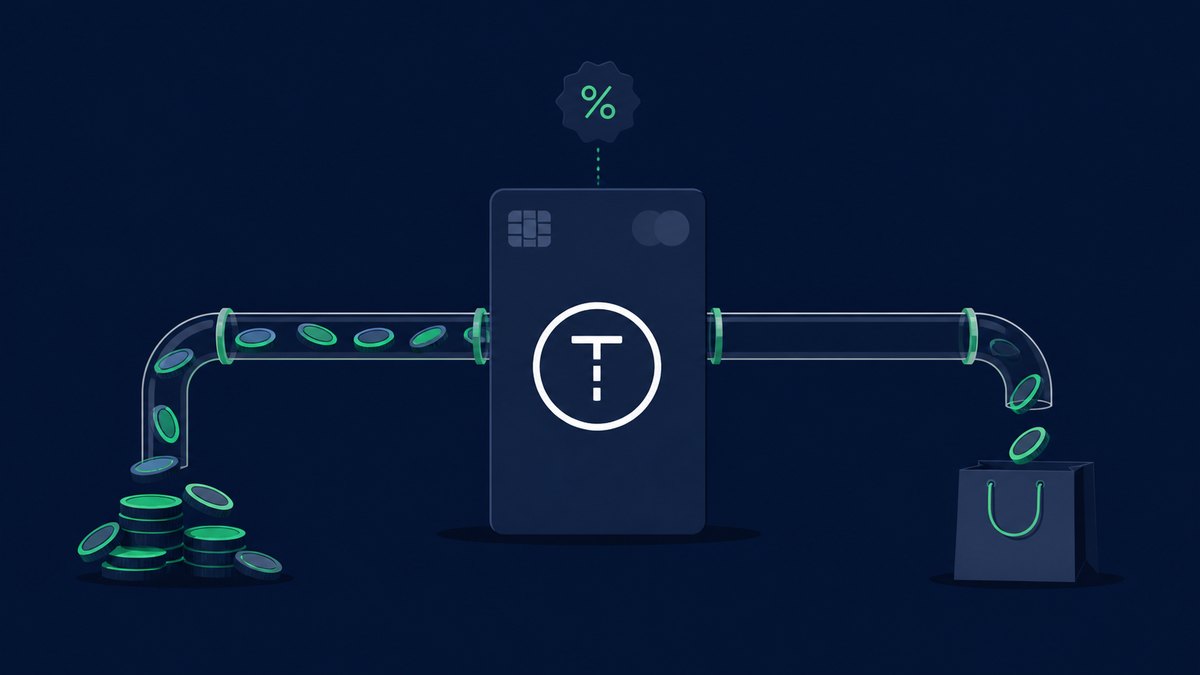
The clearest operational disclosure in the public bundle is the funding chain. EasyPay says that it currently accepts only USDT and does not support WeChat Pay or Alipay deposits. It separately explains that USD is an internal bank asset and that USDT must be converted to USD before a card can be opened. Users are therefore exposed to the blockchain transfer, the selected network, the conversion rule and the platform's own custody or ledger risk.
The first deposit must be more than 15 USDT to activate the ability to open a card. “More than” should not be read as “at least.” The live deposit page may require an exact amount including decimals, and the public text warns that an incomplete amount may not be recognised automatically. We did not find a public and stable list of supported networks, confirmations or recovery procedures, so the live deposit order is the controlling instruction.
This threshold is not the same as a disclosed issuance price. Some of the first deposit may remain as balance, while a live issuance fee or conversion cost may be deducted separately. Without an authenticated quotation, it would be misleading to describe 15 USDT as the card price.
5. Fee transparency: labels without public numbers
EasyPay's application contains labels for issuance fee, minimum issuance fee, monthly fee, recharge fee, transaction fee, withdrawal fixed fee, withdrawal percentage fee, exchange and limits. The values appear to come from authenticated, dynamic endpoints. The unauthenticated website does not publish a stable fee table that a reader can reproduce.
Consequently, this review does not invent a card price, top-up percentage, monthly charge, exchange spread, withdrawal cost or load limit. Before funding, a careful user should capture screenshots showing the selected tier and BIN, issuance fee, minimum load, monthly fee, top-up and transaction fees, failed-authorization fee, closure and balance-return policy, withdrawal fee, exchange rate and limits.
If the user must deposit before all prices become visible, that is a material transparency disadvantage. The safe response is not to assume a low price from referral advertising; it is to deposit only the minimum test amount and pause if the quote differs from expectations.
6. Failed-transaction penalties and automatic card deletion
The public terms embedded in the application state that excessive failures caused by insufficient balance are penalised. The first three failed transactions in a month are exempt; from the fourth failure onward, 0.30 USD is deducted from the card for each event. The same text says that if the monthly “chargeback rate” exceeds 20 percent, the bank system may automatically delete the card.
The wording mixes insufficient-funds authorization failures with chargebacks, which are normally distinct events. Users should ask support whether the denominator and numerator include declines, reversals, disputes or all attempted transactions. They should also ask what happens to remaining balance and pending merchant refunds if a card is automatically deleted.
In practical terms, maintain enough balance for subscriptions and advertising auto-billing, disable unused renewals and do not repeatedly retry the same card at a rejecting merchant. A small per-event fee can become significant if automated billing systems keep retrying.
7. Legal operator, licensing, privacy and custody gaps
Our public review did not find a clearly identified legal company name, registration number, registered address, financial or money-service licence number, issuing-bank relationship, programme manager or customer-fund safeguarding institution. We also did not find a clearly accessible, independently reviewable privacy policy and complete terms-of-service page on the unauthenticated routes.
The front end contains Telegram sign-in, a Telegram mini-app flow, customer-service screens and an affiliate rebate module. EasyPay advertises rebates of up to a portion of card issuance and top-up fees, with higher-tier referral arrangements for larger volumes. Referral functionality can be commercially useful, but it is not evidence of solvency, regulatory supervision or card-network approval.
Information transparency is therefore the central risk. A payment provider holds or controls balances and sensitive billing data. Users should know the contracting entity, governing law, complaint path, data controller, issuer, custody model and insolvency treatment. EasyPay's public pages do not currently let us verify those items.
8. Domain history and external risk signals
A cached ScamAdviser page records the easy-pay.site registration date as 20 March 2025, with GoDaddy as registrar and WHOIS data hidden. It reports a valid domain-validated TLS certificate and limited traffic, while its automated system assigns a very low trust score and advises extreme caution. The page also says automated systems may be wrong. This score is a risk signal, not proof of fraud.
Google News searches in Chinese for EasyPay virtual card shutdown, scam and complaints returned no matching coverage tied to this domain. The English search also produced no credible mainstream report specifically about easy-pay.site. That absence does not establish safety; a young or niche product may simply have little independent coverage.
The EasyPay name is generic and is used by unrelated payment businesses in multiple countries. Reviews and complaints must be matched to the exact easy-pay.site domain. Reports about an unrelated EasyPay company should not be attributed to this platform.
9. EasyPay compared with RDVCC, PayFun and 79Card
EasyPay versus RDVCC
Both target cross-border virtual-card users. EasyPay makes the USDT-to-internal-USD sequence unusually explicit and exposes UI concepts for card levels and selectable BINs. Its weakness is that public visitors cannot verify live pricing, active BIN ranges or the legal operator. If an RDVCC account displays costs and card details before funding, compare those reproducible facts rather than broad merchant lists.
EasyPay versus PayFun
Existing VCC Directory material positions PayFun as a crypto-funded debit-card product combining virtual and physical cards for broader everyday spending. EasyPay appears more focused on browser-managed virtual cards for advertising, AI, cloud and online purchases. Someone who needs a physical card or offline spending should investigate PayFun first; someone who only needs disposable or separated online card balances may find EasyPay's model more relevant. Live jurisdiction, KYC and fee information must still be rechecked for either provider.
EasyPay versus 79Card
Existing directory material emphasises 79Card's advertising, batch issuance and business-management use cases, and VCC Directory already has card records associated with it. EasyPay also advertises ad payments and shows BIN selection, but its public routes do not prove batch controls, API access or currently active card ranges. Teams should compare role permissions, bulk operations, invoicing, API reliability, support SLA and dispute handling rather than choosing solely on the ease of opening one card.
None of these comparisons should be read as a universal ranking. Virtual-card performance can change when issuers rotate BINs or merchants adjust risk rules. A current, small authorization test is more useful than an old success screenshot.
10. Who may find it useful
- Users who already hold USDT and can tolerate a small experimental balance.
- People who want one browser workspace for virtual cards, balances and transaction history.
- Advertisers, AI subscribers, cloud users or travellers seeking a backup payment path rather than a sole critical card.
- Users disciplined enough to keep card balances funded and monitor automated retries.
It is a poor fit for anyone who requires deposit insurance, a publicly named regulated counterparty, a guaranteed BIN, a fixed public price list, bank-transfer funding, WeChat Pay or Alipay funding, or high-value storage.
11. Pros and cons
Potential advantages visible in public material
- Clear email and verification-code signup path.
- Explicit USDT-only disclosure and first-deposit rule.
- UI coverage for tiers, BIN choice, issuance, top-up, freeze, closure and bills.
- Support and Telegram-related routes, plus an affiliate module.
- A written threshold for insufficient-balance failure charges.
Material disadvantages and unknowns
- No publicly verifiable legal operator, licence, issuer or safeguarding arrangement.
- No unauthenticated fee table for issuance, monthly, top-up, transaction, withdrawal or conversion costs.
- No reproducible list of live BINs.
- Blockchain-transfer risk is followed by platform-balance exposure.
- Ambiguous use of “failure” and “chargeback,” with unclear post-deletion refund handling.
- A relatively young domain and a very low third-party automated trust score.
- Merchant compatibility is platform marketing, not independently tested acceptance.
12. Risk-control checklist
- Use only the official signup route and verify the domain before entering credentials.
- Fund only slightly above the displayed first-deposit threshold and only with an amount you can afford to lose completely.
- Confirm the USDT network, address, exact order amount, confirmations and expiry time.
- Save the complete live quotation, BIN, tier, fee, closure, refund and withdrawal terms before opening a card.
- Test one small purchase before connecting the card to a major advertising account or essential renewal.
- Keep enough balance to avoid reaching the fourth insufficient-funds failure in a month.
- Do not store idle USDT or internal USD on the platform; fund close to actual use.
- Ask for the legal entity, issuer, governing law, privacy policy and complaint procedure in writing.
- Stop scaling if support cannot answer how remaining balance and pending refunds are handled after card deletion.
13. Verdict
EasyPay is reachable, its public signup route works, and its front-end application exposes a credible range of virtual-card operations. Those are positive operational observations. They are not evidence that customer funds are protected or that the platform is regulated.
We found no reliable public evidence proving that easy-pay.site has shut down or is a scam. We also found insufficient evidence to call it independently verified or low risk. The appropriate conclusion is observe, test small and remain highly cautious. Do not place a large balance or a mission-critical payment workflow on EasyPay until the legal entity, live fees, card issuer, refund rules and actual card performance have been verified.
Sources and date checked
- EasyPay public site and login page: platform description and public interface.
- EasyPay PWA manifest: product name, description and official icons.
- Public JavaScript bundles served by app.easy-pay.site: signup, funding, fee labels, failure rules and customer-service modules. These are platform-published front-end texts.
- ScamAdviser page for easy-pay.site: automated risk score and cached domain facts; treated only as a risk signal.
- Google News searches in Chinese and English, checked 22 July 2026: no mainstream shutdown or fraud report clearly tied to this domain was located.